 November 24, 2026
What You Overlooked in IoT Total Cost of Ownership?
Total cost of ownership (TCO) for an IoT system is everything spent on building, operating and maintaining the system over its life. Getting an accurate figure of total cost of ownership is hard: many of the cost drivers aren’t obvious at the outset.
Why Is the Unit Price the Smallest Number in the Deal?
A bill of materials understates total cost of ownership in 3 ways. First, it shows what the device costs to buy, not what it costs to run each year, and says nothing about replacements. Second, it counts shipping but not the cost of failure. Third, it stops at delivery, leaving out installation, integration and decommissioning. So the measure that holds up is cost per connected device per month.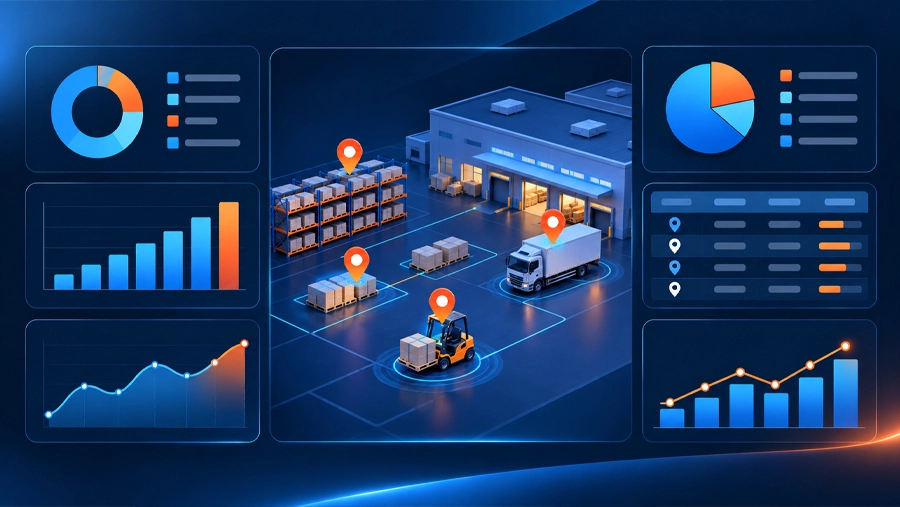
5 Key Underlying Costs
Field Operations
When asked which task is the most labour-intensive, IoT operators usually choose site visits first. If each visit costs $150, one visit per device per year would come to $150,000 across a thousand devices. Over the life of the system, maintenance can match or even exceed what the hardware cost to buy. Remote diagnostics and resets take a chunk out of that. MOKOSMART have a platform designed exclusively for customer to test, called MOKO IoT DM. At present, the DM platform supports basic configurations, alerts and dashboards.
Labor
Engineers spend hours tracking down devices that have gone offline, and staff lose time to billing discrepancies. None of it appears as a line item on an invoice, so it slips out of the budget. Price those hours at a fully burdened rate and count them from the commissioning date rather than from launch.
 Consumables and Power
Battery-powered sensors usually need a swap every 3 to 5 years. The number sounds manageable until you work it out per device. 10 dollars a replacement, every 3 years, is roughly $3.33 per device per year. Half a million endpoints and that’s $1.67 million a year, close to $16.7 million over a 10-year fleet life. The EU Batteries Regulation (2023/1542) also tightens the rules across the whole battery lifecycle, from production and use through end-of-life.
Procurement can’t fix any of this: by that stage the design decisions are already made. Low-power radios run for years on a single cell, and some designs take power from whatever the sensor is bolted to. MOKOSMART provides a LoRaWAN® Smart Tracking solution for a shared-scooter operator that draws power straight from the scooter’s battery.
Gateway and Network Expansion
Two things blow a budget, and you could have seen both coming.
Every site has a last 10% the network can’t reach: the basement, the steel-lined room, the yard out back. Fixing that isn’t another gateway. It’s a site — a roof or pole agreement, power, backhaul, an installer, and upkeep forever after.
Wireless technologies reach the end of their life. When the UK switched off 3G, hardware had to be replaced or decommissioned. Vendor quotes look linear because you pay per unit. Gateways aren’t: you pay per site, and the cost arrives in steps.
LoRaWAN® works differently. One gateway serves thousands of devices on unlicensed spectrum, so a sensor added inside its coverage costs little beyond the hardware. Cellular needs no private gateway, but every device carries a monthly fee. MOKOSMART provides both LoRaWAN® and Cellular hardware, along with BLE products.
Connectivity and Coverage
A cheap price per megabyte covers the data and nothing else: not activation, not portal access, and not what happens when a device runs past its allowance. One SKU across every market, instead of a variant per region, can save significantly in logistics, engineering and certification. Unlicensed LPWAN changes the shape of the bill and shifts part of the recurring connectivity cost into upfront capex.
Build the Number Before You Sign
A workable total cost of ownership model needs a time horizon, three cost blocks and one stress case. Set the service level first, uptime targets included. Then price every line: purchase and installation, connectivity, management, storage, security and future expansion. Restate the total per device per month, and spread connectivity across 5 years — a one-year view flatters the number.
Assume each device saves an estimated $45 a year: less downtime, fewer repairs and service visits, one service tier. Across the fleet that would be $450,000 over 5 years, with ROI near 80% and payback under 3 years. Then stress it: cut the data allowance and little changes; double the site visits and the model falls apart.
The same applies at the design stage. Decisions such as payload format, battery chemistry, enclosure rating, potted versus serviceable design, over-the-air (OTA) firmware updates, and the number of SKUs are all cheaper to settle before tooling than after.
9 Questions to Ask Before You Sign
- What does the quote exclude — activation, portal access, support?
- What does a site visit cost, and who pays for it?
- What’s the replacement cycle for consumables, and the unit cost?
- How many gateways, and what does the next increment cost?
- What happens at overage, and is there a cap?
- When a device stops reporting, who owns the ticket, and what response time does the contract guarantee?
- What’s the migration path when this radio generation retires?
- How much staff time does the platform assume?
- What does decommissioning cost?
Conclusion
None of this argues for expensive hardware. It argues for choosing the right hardware and counting every cost that follows. The lowest unit price rarely brings the lowest lifetime cost. The savings sit in battery life, in how many sites you need, and in how well you can manage the fleet remotely. Judge vendors on cost per connected device per month, and give greater weight to those who will put their numbers in writing. A cost a vendor won’t commit to on paper is a cost you’ll likely pay later. Want an ideal IoT total cost of ownership you can put in writing? Contact MOKOSMART today for details.